Attend our AGM on June 18th and cast your vote for our new board! More info here (PDF)

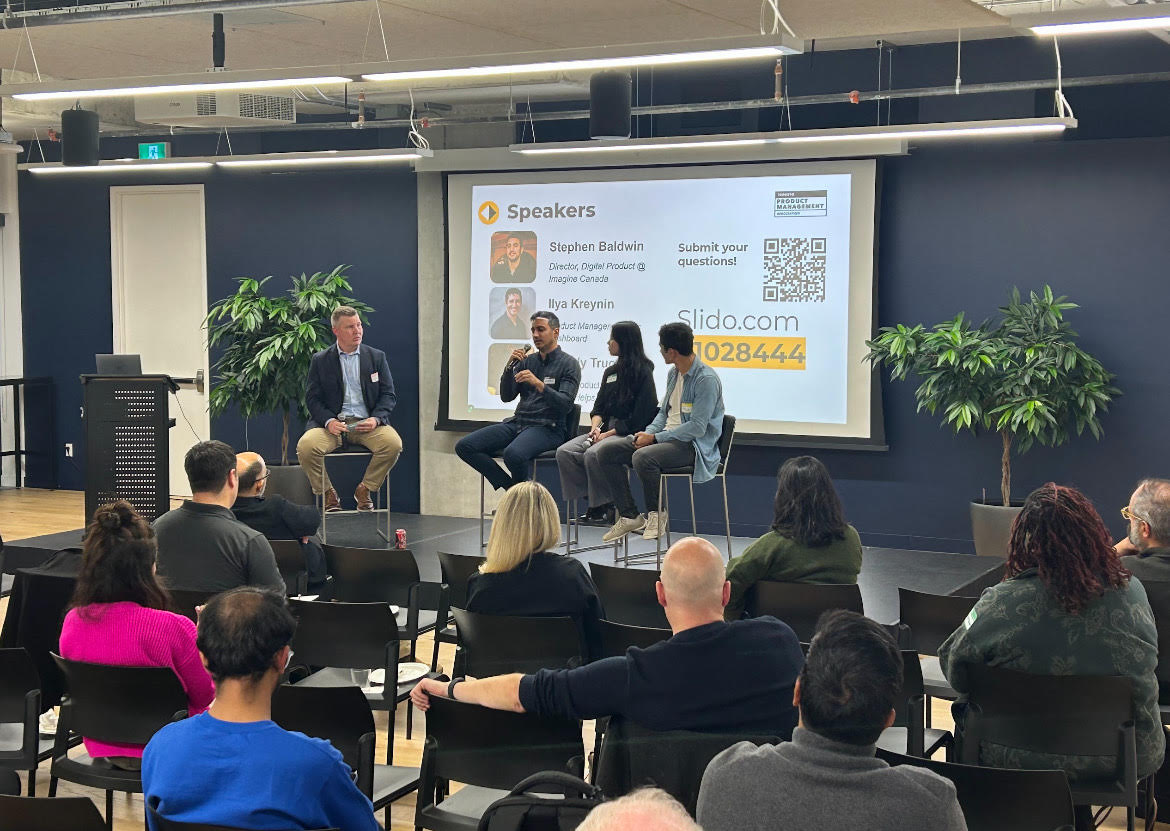
Earlier this fall, we were fortunate to have Will Mattfeld-Sarbaugh, former Director of Digital Services at the Centre for Social Innovation, moderate an energizing discussion on product thinking in the social impact sector.
Many don’t realize the scale of this work: social impact organizations employ 1 in 10 Canadians and contribute 8% of Canada’s GDP, largely through nonprofits and charities. Despite this influence, these organizations often operate with fewer resources, tighter constraints, and varying levels of product culture. Yet the need has never been greater to build digital experiences that connect people to information, causes, and each other.
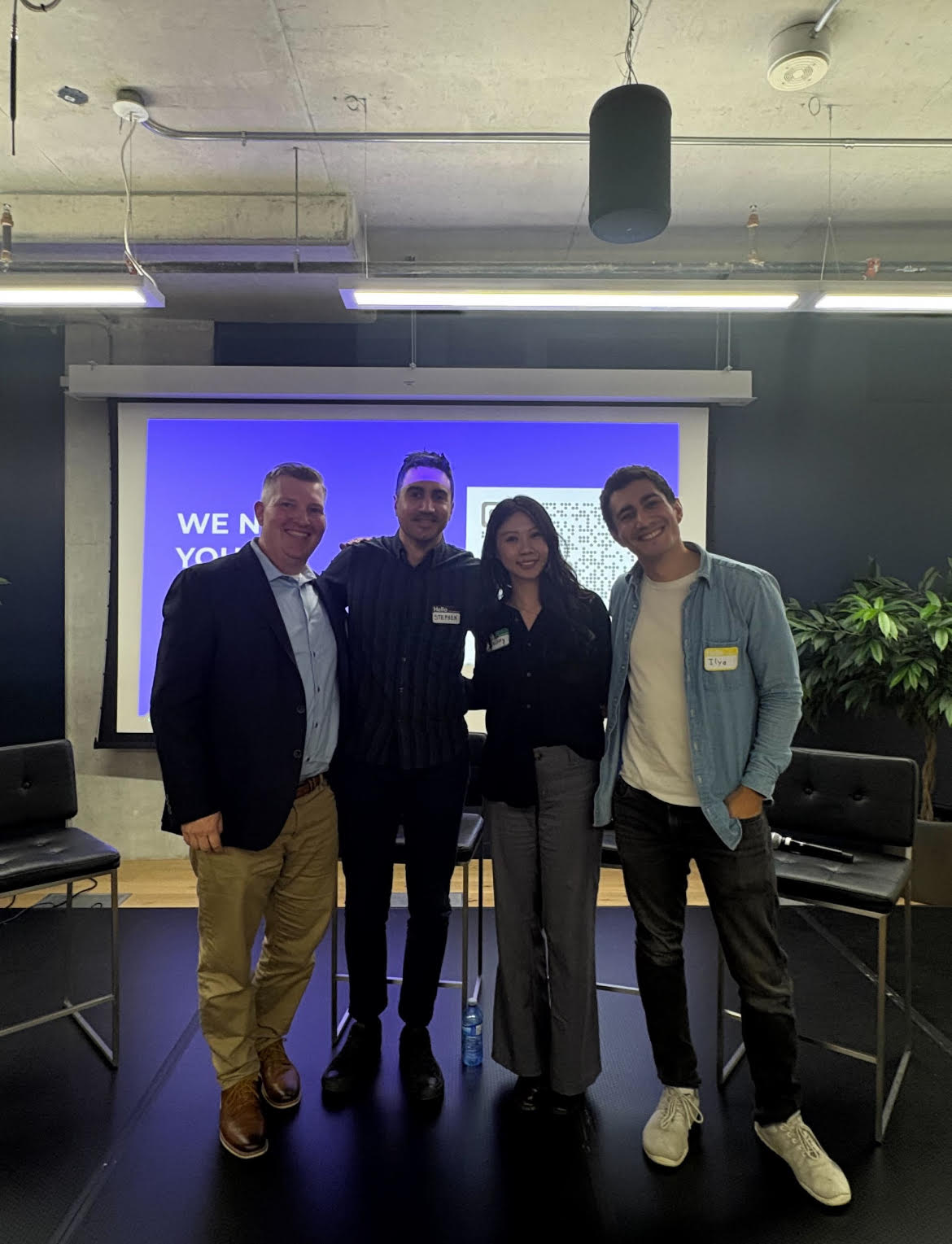
Our panel featured:
Each brought a different lens—but a shared belief that impact, not just output, defines success.
Stephen highlighted the power of connecting charities with millions in funding through Grant Connect and fostering long-term relationships that sustain impact. At a systemic level, he emphasized bringing fairness and equity into every product decision.
Melody underscored how digital tools reduce administrative burdens and open new online opportunities, allowing charities to focus on mission over paperwork. She reflected on her work at CanadaHelps, where the platform has enabled over $3.5 billion in charitable donations since 2000.
Ilya brought the civic tech perspective, highlighting volunteer-driven products like the Civic Dashboard. While these tools help residents understand city council and civic processes, their greatest impact may be cultural: empowering people to apply their skills to improve their city without waiting for permission—or a paycheck.
All three leaders stressed that success in social impact looks different but you first start with impact.
That means developing a theory of change, deeply understanding the communities you serve, and identifying metrics that reflect real outcomes—time saved, access improved, relationships strengthened, or participation expanded.
Revenue and engagement still matter, but they’re viewed as resources in service of impact, not the end goal. In mission-driven work, success is often qualitative as much as quantitative—and deeply human.
Product thinking is sector-agnostic. For product professionals coming from the private sector, much of the core skill set still applies: user research, prioritization, pattern recognition, and systems thinking. But the mindset shift is real as social impact work requires resilience, prioritization, and data-driven decision-making.
Product leaders are there to serve communities, not impose solutions. That means trusting lived experience, sharing tools rather than authority, and empowering others to make decisions.
As Ilya puts it, “Leave your ego at the door—you’re here to serve.”
Stephen added an important reality check: if you don’t connect personally to the mission, the work can be hard to sustain. Purpose isn’t a “nice to have”—it’s fuel.
One of the most energizing themes of the evening was accessibility. You don’t need a formal role to do impact-driven product work. Volunteer projects, civic tech meetups, and community organizations offer endless opportunities to apply product skills right now.
In fact, doing the work before being paid for it is often what opens doors later. As Ilia put it simply: you are allowed to start.
Volunteering is a powerful way to start. With 90% of charities being small organizations, many welcome enthusiastic contributors aligned with their mission.
Programs like the TPMA Mentorship Program can help emerging product managers build confidence, gain hands-on experience, and find their place in the sector.
The conversation didn’t frame social impact as a niche—it framed it as a lens every organization can benefit from.
For-profit companies that incorporate impact thinking often see stronger alignment, deeper employee engagement, and more resilient cultures. When people understand why their work matters beyond revenue, they do better work—and stay longer.
User empathy, systems thinking, and community awareness aren’t just ethical choices. They are strategic ones.
What excites the panel most about the future of mission-driven product work?
For Ilia, it’s the fact that this space is still being defined. The “playbook” is being written in real time—and everyone in the room is invited to help write it.
Melody pointed to generational shifts in giving and participation, which will fundamentally change how products for generosity are designed.
Stephen highlighted the growing strength of community-led tech movements as a counterbalance to purely individualistic approaches to innovation.
And if you’re looking for a place to start? Look around the room. Chances are, your next collaborator is already there.
Click here if you’re interested in watching the full discussion.
We extend our gratitude to Brain Station for hosting and to the incredible TPMA volunteers who make these events possible. Until next time, keep building, iterating, and innovating!
Mentorship program and in-person event experiences are at an extra cost.
Join for free!Join the TPMA Slack Community with 1000+ members
Free Virtual TPMA events for the entire TPMA Season
Become the first to know about in-person events and networking opportunities
Earlier this fall, we were fortunate to have Will Mattfeld-Sarbaugh, former Director of Digital Services at the Centre for Social Innovation, moderate an energizing discussion on product thinking in the social impact sector.
Many don’t realize the scale of this work: social impact organizations employ 1 in 10 Canadians and contribute 8% of Canada’s GDP, largely through nonprofits and charities. Despite this influence, these organizations often operate with fewer resources, tighter constraints, and varying levels of product culture. Yet the need has never been greater to build digital experiences that connect people to information, causes, and each other.
Our panel featured:
Each brought a different lens—but a shared belief that impact, not just output, defines success.
Stephen highlighted the power of connecting charities with millions in funding through Grant Connect and fostering long-term relationships that sustain impact. At a systemic level, he emphasized bringing fairness and equity into every product decision.
Melody underscored how digital tools reduce administrative burdens and open new online opportunities, allowing charities to focus on mission over paperwork. She reflected on her work at CanadaHelps, where the platform has enabled over $3.5 billion in charitable donations since 2000.
Ilya brought the civic tech perspective, highlighting volunteer-driven products like the Civic Dashboard. While these tools help residents understand city council and civic processes, their greatest impact may be cultural: empowering people to apply their skills to improve their city without waiting for permission—or a paycheck.
All three leaders stressed that success in social impact looks different but you first start with impact.
That means developing a theory of change, deeply understanding the communities you serve, and identifying metrics that reflect real outcomes—time saved, access improved, relationships strengthened, or participation expanded.
Revenue and engagement still matter, but they’re viewed as resources in service of impact, not the end goal. In mission-driven work, success is often qualitative as much as quantitative—and deeply human.
Product thinking is sector-agnostic. For product professionals coming from the private sector, much of the core skill set still applies: user research, prioritization, pattern recognition, and systems thinking. But the mindset shift is real as social impact work requires resilience, prioritization, and data-driven decision-making.
Product leaders are there to serve communities, not impose solutions. That means trusting lived experience, sharing tools rather than authority, and empowering others to make decisions.
As Ilya puts it, “Leave your ego at the door—you’re here to serve.”
Stephen added an important reality check: if you don’t connect personally to the mission, the work can be hard to sustain. Purpose isn’t a “nice to have”—it’s fuel.
One of the most energizing themes of the evening was accessibility. You don’t need a formal role to do impact-driven product work. Volunteer projects, civic tech meetups, and community organizations offer endless opportunities to apply product skills right now.
In fact, doing the work before being paid for it is often what opens doors later. As Ilia put it simply: you are allowed to start.
Volunteering is a powerful way to start. With 90% of charities being small organizations, many welcome enthusiastic contributors aligned with their mission.
Programs like the TPMA Mentorship Program can help emerging product managers build confidence, gain hands-on experience, and find their place in the sector.
The conversation didn’t frame social impact as a niche—it framed it as a lens every organization can benefit from.
For-profit companies that incorporate impact thinking often see stronger alignment, deeper employee engagement, and more resilient cultures. When people understand why their work matters beyond revenue, they do better work—and stay longer.
User empathy, systems thinking, and community awareness aren’t just ethical choices. They are strategic ones.
What excites the panel most about the future of mission-driven product work?
For Ilia, it’s the fact that this space is still being defined. The “playbook” is being written in real time—and everyone in the room is invited to help write it.
Melody pointed to generational shifts in giving and participation, which will fundamentally change how products for generosity are designed.
Stephen highlighted the growing strength of community-led tech movements as a counterbalance to purely individualistic approaches to innovation.
And if you’re looking for a place to start? Look around the room. Chances are, your next collaborator is already there.
Click here if you’re interested in watching the full discussion.
We extend our gratitude to Brain Station for hosting and to the incredible TPMA volunteers who make these events possible. Until next time, keep building, iterating, and innovating!
Toronto Product Management Association (TPMA) is a community focused on development, growth and networking of Product professionals in the Greater Toronto Area.